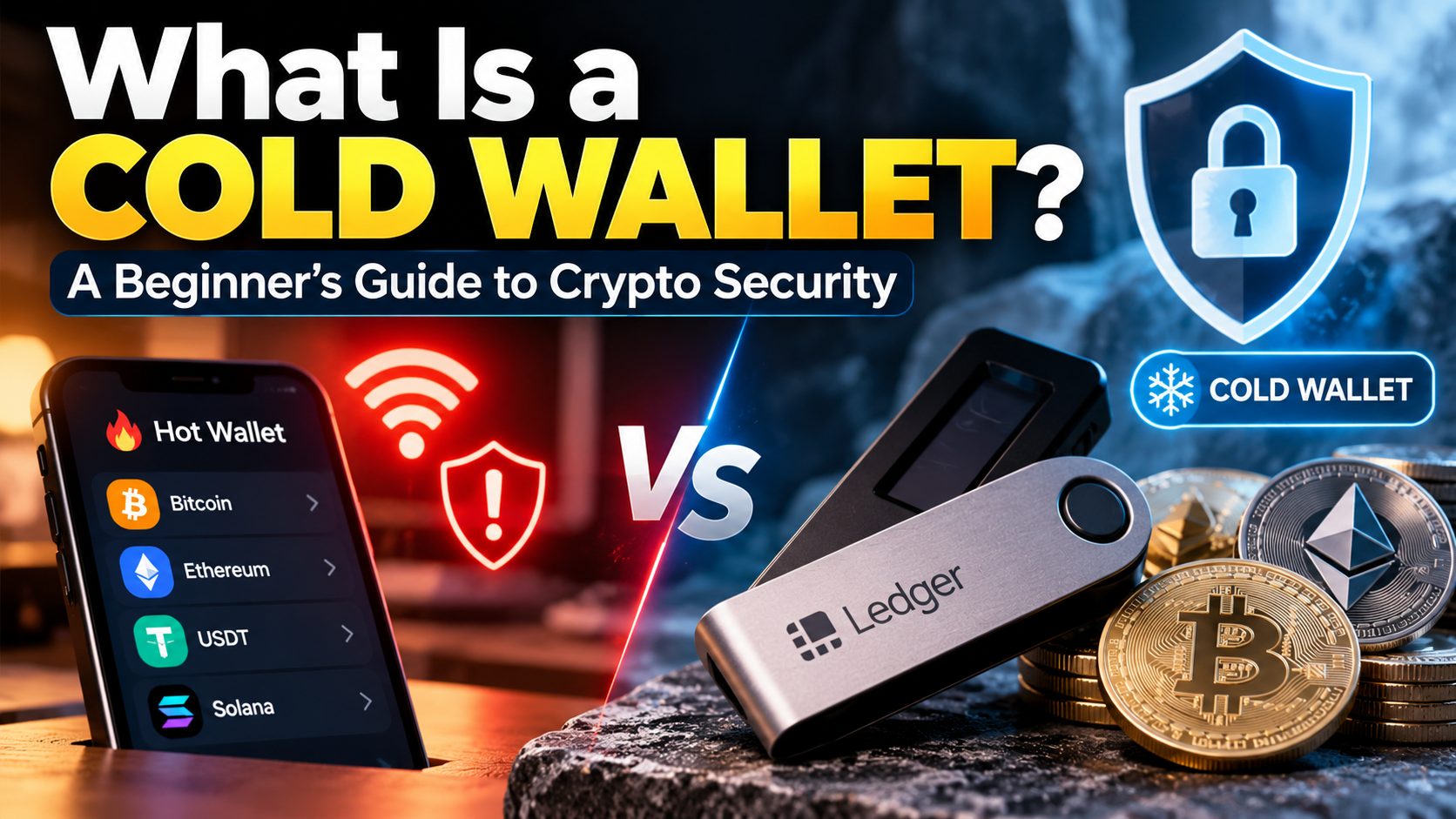

A cold wallet is one of the most widely discussed ways to protect cryptocurrency from online threats. Unlike a typical software wallet connected to the internet, a cold wallet is designed to keep the private keys used to authorize crypto transactions offline.
If you own Bitcoin, Ethereum, or other digital assets, understanding cold storage can help you make better decisions about wallet security. In this guide, you will learn what a cold wallet is, how it works, the different types available, and how it compares with a hot wallet.
What Is a Cold Wallet?
A cold wallet is a cryptocurrency storage method that keeps the private keys used to control digital assets offline. By reducing private keys' exposure to internet-connected devices, cold storage can help protect against certain online attacks, including malware and remote hacking attempts.
Cold storage commonly uses a hardware wallet or another carefully managed offline key-storage method. A hardware wallet can connect to a computer or smartphone when needed while keeping its private keys isolated from the connected device.
Cryptocurrency generally remains recorded on its blockchain. A wallet manages the keys that allow you to authorize transactions; it does not literally store Bitcoin or other blockchain-based assets inside a physical device.
Learn more in our guide to what a hardware wallet is.
How Does a Cold Wallet Work?
A cold wallet protects cryptocurrency by keeping sensitive signing keys offline or isolated from an internet-connected environment. A typical hardware-wallet transaction works as follows:
- Wallet setup: The wallet generates or securely imports the keys needed to control supported cryptocurrency addresses.
- Offline key protection: Private keys remain protected within the offline device or designated secure environment.
- Transaction preparation: You create a transaction using compatible wallet software or another interface.
- Transaction verification: You review the recipient address, network, and transaction details on a trusted display where available.
- Transaction signing: The wallet signs the transaction without exposing the private key to the connected computer or phone.
- Broadcasting: The signed transaction is sent to the relevant blockchain network through a connected device or service.
The transaction can be broadcast online even though the private key remains offline. The security benefits depend on the device, its implementation, the software used, and the user's behavior.
Types of Cold Wallets
1. Hardware Wallets
A hardware wallet is a physical device designed to generate or protect private keys and sign cryptocurrency transactions. Depending on the model, it may connect through USB, Bluetooth, or another supported method.
Many hardware wallets display transaction details for verification and require physical confirmation before signing. They are a common cold-storage option for people who want to manage their own cryptocurrency keys.
A hardware wallet does not automatically make every transaction safe. Users still need to protect their recovery phrase, verify addresses, avoid malicious software, and purchase devices through trustworthy channels.
2. Paper Wallets
A paper wallet is a physical printout or written record containing cryptocurrency key information, such as a private key or recovery-related data, depending on the format.
Paper can be disconnected from the internet, but that does not make paper wallets automatically secure. Generating keys on a compromised device, exposing them to a printer or camera, storing them improperly, or reusing keys incorrectly can introduce serious risks.
Paper wallets can also be damaged by water, fire, fading, or physical loss. Beginners should understand these risks before choosing this approach.
3. Other Offline Key-Storage Methods
Advanced users and organizations may use dedicated offline computers, specialized signing devices, or multisignature arrangements to protect cryptocurrency keys. These methods can provide additional security when configured correctly, but they require technical knowledge and careful operational procedures.
Cold Wallet vs. Hot Wallet: Key Differences
The main difference between a cold wallet and a hot wallet is how private keys are protected and how they interact with internet-connected systems.
| Feature | Cold Wallet | Hot Wallet |
|---|---|---|
| Key protection | Designed to keep private keys offline or isolated | Typically uses keys in an internet-connected software environment |
| Internet exposure | Generally lower exposure of private keys to online threats | Greater exposure to certain online threats |
| Transaction convenience | May require an extra device or signing step | Usually convenient for frequent transactions |
| Common examples | Hardware wallets and carefully managed offline storage | Mobile wallets, browser wallets, and desktop software wallets |
| Typical use | Long-term storage and less frequent transactions | Everyday transfers, trading, and supported decentralized applications |
| Main risks | Device loss, recovery phrase exposure, physical damage, and signing mistakes | Malware, phishing, malicious approvals, and key theft |
Neither wallet type is risk-free. A cold wallet can reduce some online attack risks, while a hot wallet can be more practical for frequent transactions. The appropriate choice depends on how you use cryptocurrency and how effectively you manage security.
Benefits of Using a Cold Wallet
1. Reduced Exposure to Online Attacks
Keeping private keys offline can reduce their exposure to internet-based malware and remote attacks. This is particularly useful when storing cryptocurrency that you do not need to access frequently.
2. Greater Control Over Your Assets
When you use a properly configured self-custody cold wallet, you control the keys needed to authorize transactions. You do not need to rely on a cryptocurrency exchange to maintain custody of those keys.
Self-custody also means accepting responsibility for backups, recovery, device security, and transaction verification.
3. Useful for Long-Term Storage
Cold storage can be suitable for investors who plan to hold cryptocurrency over an extended period and make relatively few transactions. Keeping long-term holdings separate from everyday spending funds can also reduce the consequences of compromising a frequently used wallet.
4. Reduced Dependence on Exchange Custody
Moving assets from a custodial exchange account to a self-custody wallet can reduce exposure to certain exchange-specific risks, such as account restrictions or a platform's custody failure. However, you take on direct responsibility for managing the keys and recovery process.
Risks and Limitations of Cold Wallets
Cold storage is not a guarantee against cryptocurrency theft or loss. Consider these risks before choosing this approach:
- Lost recovery phrase: If you lose access to your wallet and cannot recover the required keys, your cryptocurrency may become permanently inaccessible.
- Physical damage or theft: A device can be stolen, damaged, or destroyed. Recovery depends on whether you have a valid, secure backup.
- Phishing attacks: Criminals may trick you into revealing your recovery phrase or approving a malicious transaction.
- Malicious transaction details: A compromised computer can prepare an unwanted transaction. Verify the transaction on the wallet's trusted display where possible.
- Counterfeit or compromised devices: Untrustworthy sellers, tampered devices, or unsafe setup procedures can undermine security.
- User error: Sending funds to the wrong address, selecting the wrong network, or signing an unsafe transaction can result in irreversible losses.
- Limited convenience: Some cold-storage methods involve extra steps and are less convenient for frequent trading or decentralized application use.
A cold wallet protects keys through a particular security model. It cannot eliminate every risk associated with cryptocurrency ownership.
How to Set Up and Use a Cold Wallet Safely
Follow these general practices when setting up a self-custody cold wallet. Always consult the official documentation for your specific device.
- Choose a reputable provider: Research the manufacturer, device security features, supported assets, and official documentation. Buy through an authorized or otherwise trustworthy channel.
- Verify the device: Follow the manufacturer's authenticity checks and setup instructions. Do not use a recovery phrase supplied by a seller or a preconfigured wallet.
- Create your wallet securely: Generate a new wallet using the device's documented setup process. Never enter your recovery phrase into an untrusted website or application.
- Back up the recovery phrase: Record the phrase exactly as instructed and store it in a secure, private location.
- Keep the backup private: Do not share your recovery phrase with anyone. Avoid storing it in screenshots, email, cloud notes, or other internet-accessible locations.
- Verify receiving addresses: Check the address and supported network before transferring funds. For significant amounts, consider making a small test transaction first.
- Verify transactions before signing: Review the destination address, amount, network, and relevant contract details. Reject transactions you do not understand.
- Keep software and firmware authentic: Follow official update instructions and verify software sources before installing updates.
- Test recovery carefully: Understand the manufacturer's recommended recovery-verification process. Never expose your recovery phrase to an untrusted tool just to test it.
For more information, read our guides on what a seed phrase is and how to store a seed phrase safely.
Cold Wallet vs. Hardware Wallet: Are They the Same?
These terms are related, but they do not mean exactly the same thing.
- Cold wallet or cold storage: Describes a method of keeping cryptocurrency private keys offline or isolated from internet-connected environments.
- Hardware wallet: Describes a physical device designed to protect private keys and sign transactions.
A hardware wallet is commonly used for cold storage, but the terms are not interchangeable in every context. Hardware wallet designs differ, and the way a device is used affects its security. A device may connect to online software for transaction preparation and broadcasting while keeping its private key isolated.
Read our detailed guide to hardware wallets to understand their features and limitations.
Should You Use a Cold Wallet or a Hot Wallet?
The right choice depends on your transaction frequency, the amount you can afford to lose, your technical confidence, and your security requirements.
| Your Situation | Option to Consider | Reason |
|---|---|---|
| Long-term cryptocurrency holdings | Cold storage | Can reduce online exposure of private keys |
| Frequent small transactions | Hot wallet | Usually offers faster, more convenient access |
| Regular decentralized application activity | A compatible wallet with carefully managed funds | Supports interaction with relevant blockchain applications |
| Managing long-term holdings and daily spending | Separate cold and hot wallets | Can limit the amount exposed to everyday wallet activity |
Some users maintain a cold wallet for long-term holdings and a separate hot wallet for smaller, frequently used amounts. This approach can help separate storage from daily activity, but it requires careful management of both wallets.
Frequently Asked Questions About Cold Wallets
1. What is a cold wallet in cryptocurrency?
A cold wallet is a method of keeping cryptocurrency private keys offline or isolated from internet-connected systems. It is commonly used to reduce exposure to certain online attacks.
2. Is a cold wallet safer than a hot wallet?
A properly configured cold wallet can reduce some online risks because its private keys are kept offline or isolated. However, it can still be compromised through poor backups, phishing, malicious transaction approvals, physical theft, or user error.
3. Does a cold wallet store Bitcoin offline?
Bitcoin ownership is recorded on the Bitcoin blockchain. A cold wallet protects the private keys used to authorize transactions rather than storing Bitcoin itself inside the device.
4. Can I receive cryptocurrency while using a cold wallet?
Yes. You can generally share the appropriate public receiving address to receive supported cryptocurrency. Verify that the asset and network are compatible with your wallet.
5. Can I send cryptocurrency from a cold wallet?
Yes. You can prepare a transaction, authorize it using the wallet's signing process, and broadcast it to the relevant blockchain network. The exact steps depend on the device and wallet software.
6. What happens if I lose my cold wallet?
If you have a valid recovery backup and follow the correct recovery procedure, you may be able to restore access using a compatible wallet. Without the necessary keys or recovery information, access may be permanently lost.
7. Do I need a cold wallet for a small amount of cryptocurrency?
Not necessarily. The decision depends on your risk tolerance, transaction frequency, and security needs. A reputable wallet with good security practices may be sufficient for smaller amounts, while cold storage may be appropriate for longer-term holdings.
8. Is a paper wallet a good option for beginners?
Traditional paper wallets can be difficult to generate, verify, and maintain securely. Beginners should understand the risks before using one. A reputable hardware wallet may offer a more manageable approach to self-custody.
9. Can a cold wallet be hacked?
Cold storage reduces certain online attack risks, but it does not make cryptocurrency immune to theft. Compromised backups, malicious transactions, counterfeit devices, unsafe recovery procedures, and other security failures can still result in losses.
10. Is a cold wallet the same as a decentralized wallet?
No. Cold storage describes how private keys are kept, while a decentralized or non-custodial wallet generally refers to control over those keys. A self-custody wallet can be hot or cold, depending on its design and use.
For additional context, read our guide to decentralized cryptocurrency wallets.
Final Thoughts
A cold wallet can be an effective way to reduce the online exposure of cryptocurrency private keys, particularly when you plan to hold digital assets for an extended period. However, security depends on more than the wallet itself. Your recovery backup, transaction verification habits, device authenticity, and protection against phishing are all important.
Before choosing a storage method, consider how often you transact, which blockchain networks you use, and how confidently you can manage self-custody. The goal is to choose a wallet setup that balances security, accessibility, and your ability to maintain it safely.
Disclaimer: This article is for educational purposes only and does not constitute financial, investment, or cybersecurity advice tailored to your circumstances. Cryptocurrency transactions may be irreversible, and self-custody carries risks, including permanent loss of access to funds.